
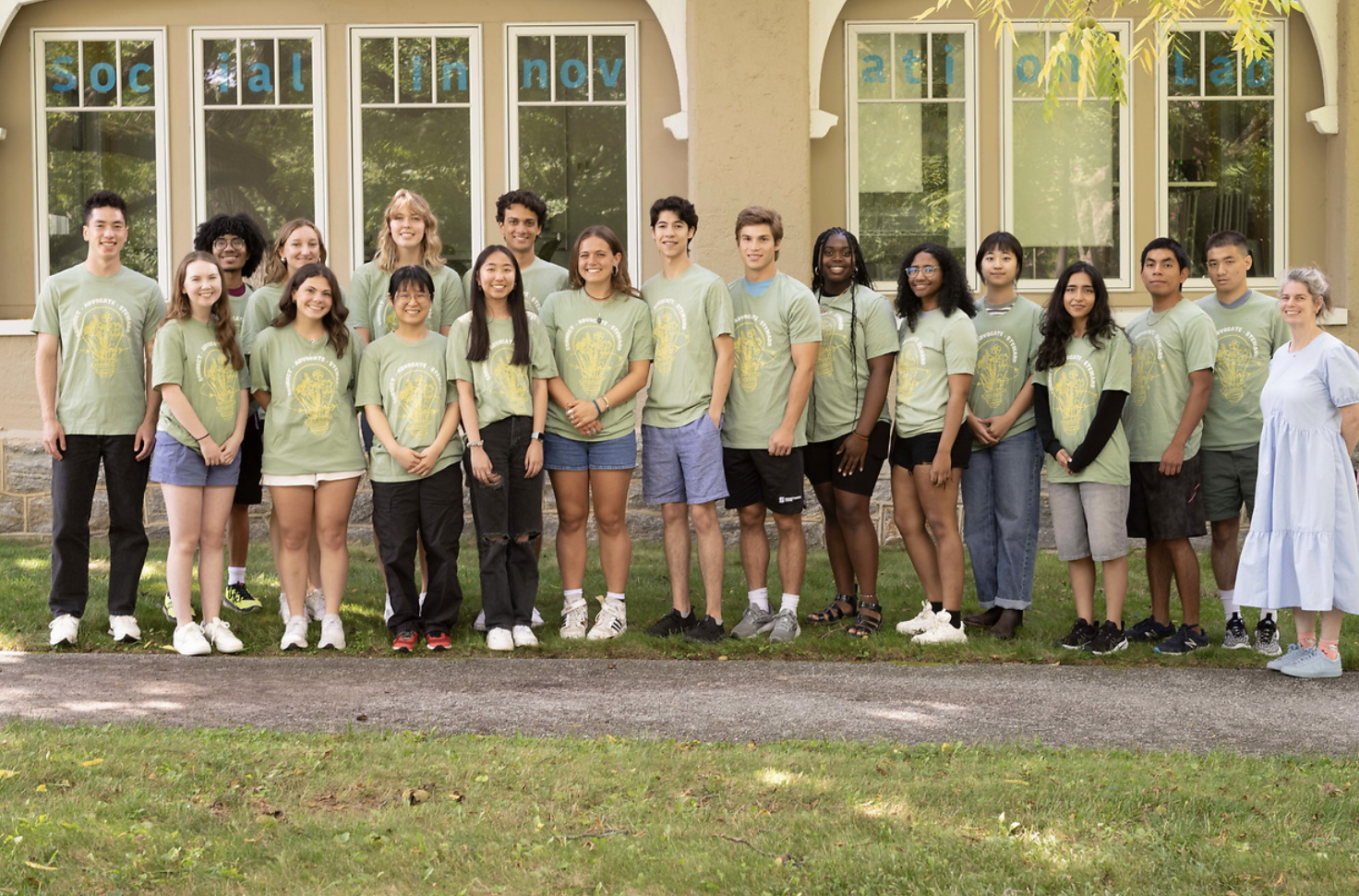
Swarthmore is a beautiful college not just for being an arboretum and home to numerous flora and fauna, but also for our campus sustainability initiatives and practices, which are unparalleled. One of the offices we have to thank for our campus sustainability practices is the Office of Sustainability (OOS). OOS harbors a plethora of sustainability initiatives and programs at Swarthmore. Let’s say you want to contribute to sustainability as a student; you can do so through the Green Advisor (GA) Program or even through the President’s Sustainability Research Fellowship (PSRF). Now, I will discuss the Green Advisor Program in more depth throughout this article.
As a GA, you are assigned various sustainability projects, and collectively they are all so cool. In the past, I worked on Art and Sustainability and more recently worked with one of the Environmental Studies professors on doing inventory for the Swarthmore Borough. GAs are residential peer leaders (RPLs) in addition to Resident Assistants (RAs) and Student Academic Mentors (SAMs). GAs act as sustainability advocates for their residents/peers and host various events throughout semesters. Some events of mine in the past consisted of baking apple turnovers, painting bottle cap pins and even carving pumpkins. I really enjoyed planning my RPL events!


Other GA projects have consisted of creating rain gardens, our Food Recovery Fridge and even Worthmore. The Food Recovery Fridge is a GA project designed to lessen the amount of food waste entering our compost here on campus. Our Food Recovery Liaisons (usually student employees) gather the food from events on campus when they end, bring the food to the fridge, label it and students are able to grab food as they please. I am a frequent visitor of the Food Recovery Fridge, and I have seen food ranging from Crumbl Cookie and Chipotle all the way to Caribbean food. It is a great alternative to food on campus and it is completely free!


The photo to the right was taken by Sofia Reyes
Now, as for Worthmore, that is basically our campus thrift store. It has all things except clothing and shoes. Some common things found are tea kettles, hangers, various cookware/utensils, lamps, trash cans and art supplies. Worthmore is a great sustainability initiative that promotes giving students donated belongings a second home. I really appreciate the Worthmore free store for its purpose and cool finds. People have found yoga balls and in one case, a student found a Ninja Creami.


Photos taken by Laurence Kesterson
Another component of being a Green Advisor is the weekly compost sorting shift. During the academic year, we all sort through the campus’ compost and to say the least, it is very interesting seeing what people end up putting in the compost. During my past shifts, I have found jeans, paint canvases and even Q-tips (all of which are not compostable). Something cool though is that once the compost is sorted, it is taken over to Kitchen Harvest to be processed and used at a family farm nearby.


My friend Nichole and I; two incoming PSRF’s, made the Compost Shed sign during our first year as GAs.
One of the final components of being a GA is our training. It was one of the highlights of my job. GA training allows you to build community with your peers, OOS staff and even our Environmental Services (EVS) Team. During training, we get familiarized with sustainability on campus, like our Zero by Thirty-Five Initiative or even exploring Crum Woods. When visiting Crum Woods, Sue McQueen, the Scott Arboretum Campus Engagement Manager, is typically our guide. During guided tours, Sue will often pick up things off of the trail for people to eat. It might sound odd at first, but it is really cool seeing what can be eaten across the trail. However, if you are not familiar with foraging or horticulture, I DO NOT recommend just grabbing anything off of the trail.
At the end of each spring, we have our GA presentations where we get to share all that we have been working on for the academic year or semester. It is always so cool seeing what people have accomplished and how they have left their environmental mark here on campus. If being a Green Advisor sounds of interest to you, their application opens up every spring! You will not regret it.
