
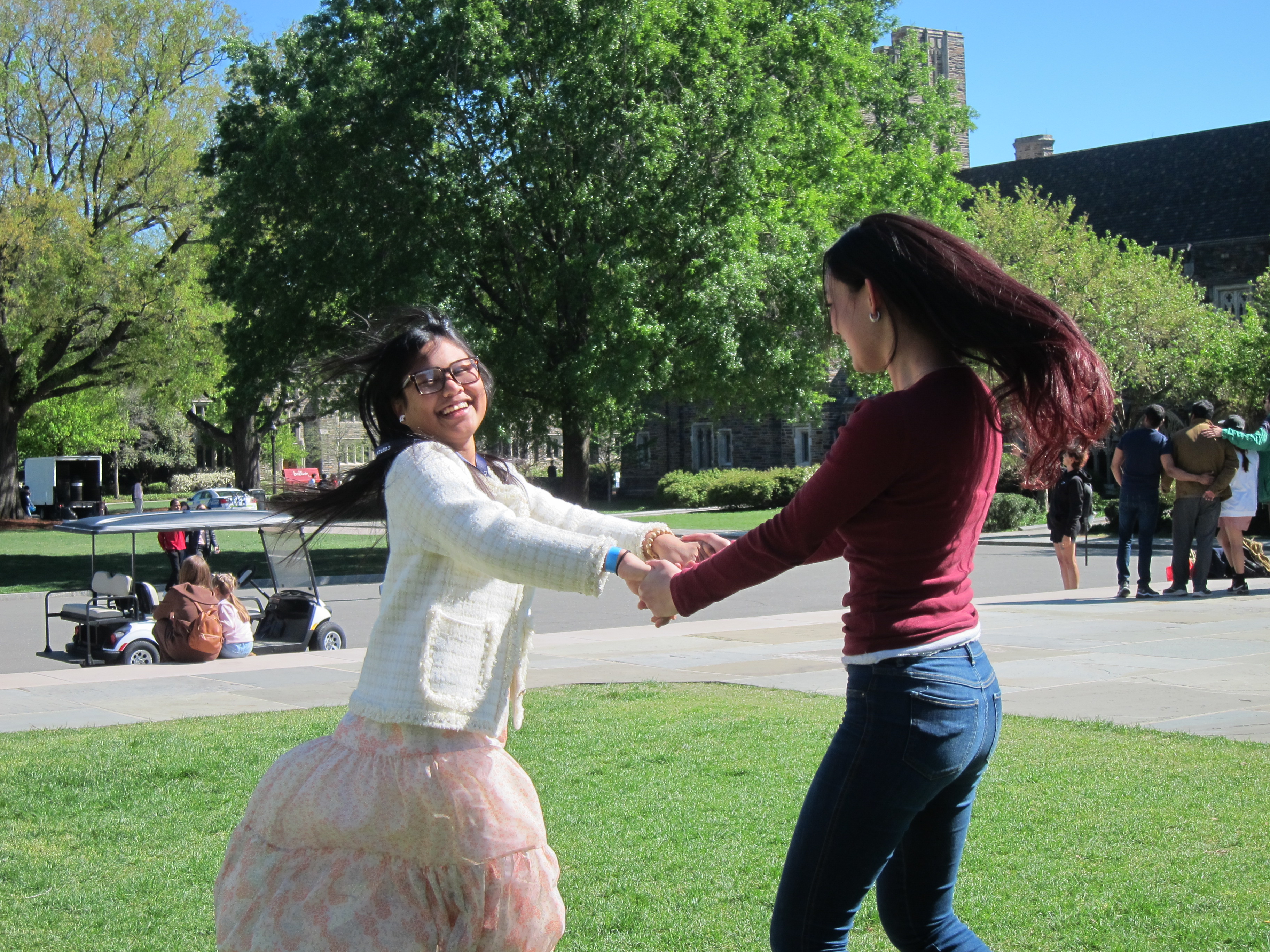
Organizing to Redefine Asian Activism (ORAA) was the first student group I joined during my freshman year at Swarthmore. In our very first meeting, many of the current members shared their fun memories at ECAASU and their continued excitement for it in the upcoming semester. As I sat in my chair, observant of the new faces and the brand new environment, I simply wondered: what in the world is ECAASU?!?
I soon came to learn of the East Coast Asian American Student Union (ECAASU) as I spent my first-year as an intern for the club. ECAASU is a nonprofit organization that ameliorates the lives and issues of Asian and Asian-Americans, and they hold annual conferences with students, educators, and organizations that educate and inform its members. This is done through workshops, roundtables, and panels about significant issues and situations affecting the lives of Asians/Asian-Americans across the nation.
This spring, it was held at Duke University in North Carolina. This was undoubtedly a costly event, from transportation, to registration and lodging fees. It was through the various funding opportunities at Swarthmore, namely the Intercultural Center and the Provost’s Office—two of many programs that provide students and/or student groups with financial resources for conferences—that our trip was possible. It was my first time flying to the southern state, and to be able to do it with those I appreciated made it much more exciting!


Our first day in North Carolina meant exploring the new environment and the people there. We ate at a nearby restaurant and planned logistics for the rest of our stay. After traversing through the neighboring parks, cafes, and shops, we headed down to the opening ceremony, where we registered as a group and mingled with the other student organizations present. They offered excellent performances by the Raleigh Montagnard Dancers, Duke’s Asian cultural a cappella Group, as well as the University of North Carolina’s Flying Silk Dancers.


The next day, we attended sets of workshops, fairs, and roundtables by the various groups and organizations. The first workshop I attended was titled “From Shore to Shore: Recentering Understandings of Coastal Connection,” which decentralized the common narrative that Asian American Native Hawaiian and Pacific Island (AANHPI) regions were culturally isolated due to their overseas boundaries. After group reflections regarding our interconnectivity with the oceans, coasts, and waters, we ended the workshop by creating our own map of the world, where we pieced together our cultural currents.

I also decided to stop by the workshop being conducted by other ORAA members, where they held an introduction to investigative journalism and how creative media can be utilized to provide awareness on the injustices being faced by undocumented Asian Americans and those in east coast detention centers. It was indeed encouraging to see the attendees partaking in zine-making with our members and further being able to distribute their work to the ECAASU community.


Soon it was time for the last workshop, where I then filled the shoes of a presenter. Interested in the various subjects I was able to explore in the conference, I decided to work with a few of my members on a workshop called “How Did You Know I’m Filipino?,” where we deconstructed the meaning of Filipino pride and the performance aspect that came with our identities. While this subject was certainly prominent for our Filipino attendees, the room remained filled with students of different identities and cultural backgrounds. My group felt accomplished to know that we were leaving our workshop with newly formed relationships with our peers and the varying experiences they brought to the table.


Before the day ended and it was finally time to head back to our campus, we could not help but reflect as a whole on what we learned throughout our journey at ECAASU and the past academic year. These moments of realizations and sense of gratefulness that we had for each other, while knowing that we remained optimistic for the future of our organization and its capabilities, only made me more glad to have found a second family here at Swarthmore.


