
While the prospect of going to law school had always been a consideration for me, my freshman year of college was when this potential path became a more concrete root in my mind. Ergo, this year I decided to participate in as many legal-esque extracurricular activities as possible. Through this handful of new commitments, I became a member of Swarthmore’s Debate Club: the Amos J. Peaslee Debate Society.
The Peaslee Debate Society, Swarthmore’s sole competitive debate team, was founded back in 1871. Amos J. Peaslee, class of 1907, former United States Ambassador to Australia and Deputy Special Assistant to President Dwight D. Eisenhower, had been a member of the club during his time as a student. Through his support, the organization flourished. Now, they have the opportunity to travel all around the world (last year’s big trip was to Panama; this year, it is to Bulgaria). The club practices both APDA and BP, both of which I have thus far had the pleasure of competing in.
My first tournament was the Swarthmore Novice Tournament, SwatNOV: an APDA Hunger Games-esque competition. APDA, or American Parliamentary Debate, is a collegiate debate format that has two two-person teams. On one side, GOV (Government) prepares a motion ahead of time and presents it to the other team (Opposition/OP), who then gets fifteen minutes to prepare their counter-argument. This particular style, in many ways, is very unique. Often, the opposing team will present vaguely nonsensical arguments, but a failure to argue against their points could result in those arguments being considered in their favor.
I find the APDA motions incredibly exciting to argue. Without spoiling too much of the content, I had the opportunity to argue three personal motions: one about Batman, one about unions, and one about liberal democracies post-fascist regimes. On the opposing side, I remember arguing a case about the rise in thrift culture that engaged me greatly, as it allowed me to think in-depth about something so evolving in modern society.
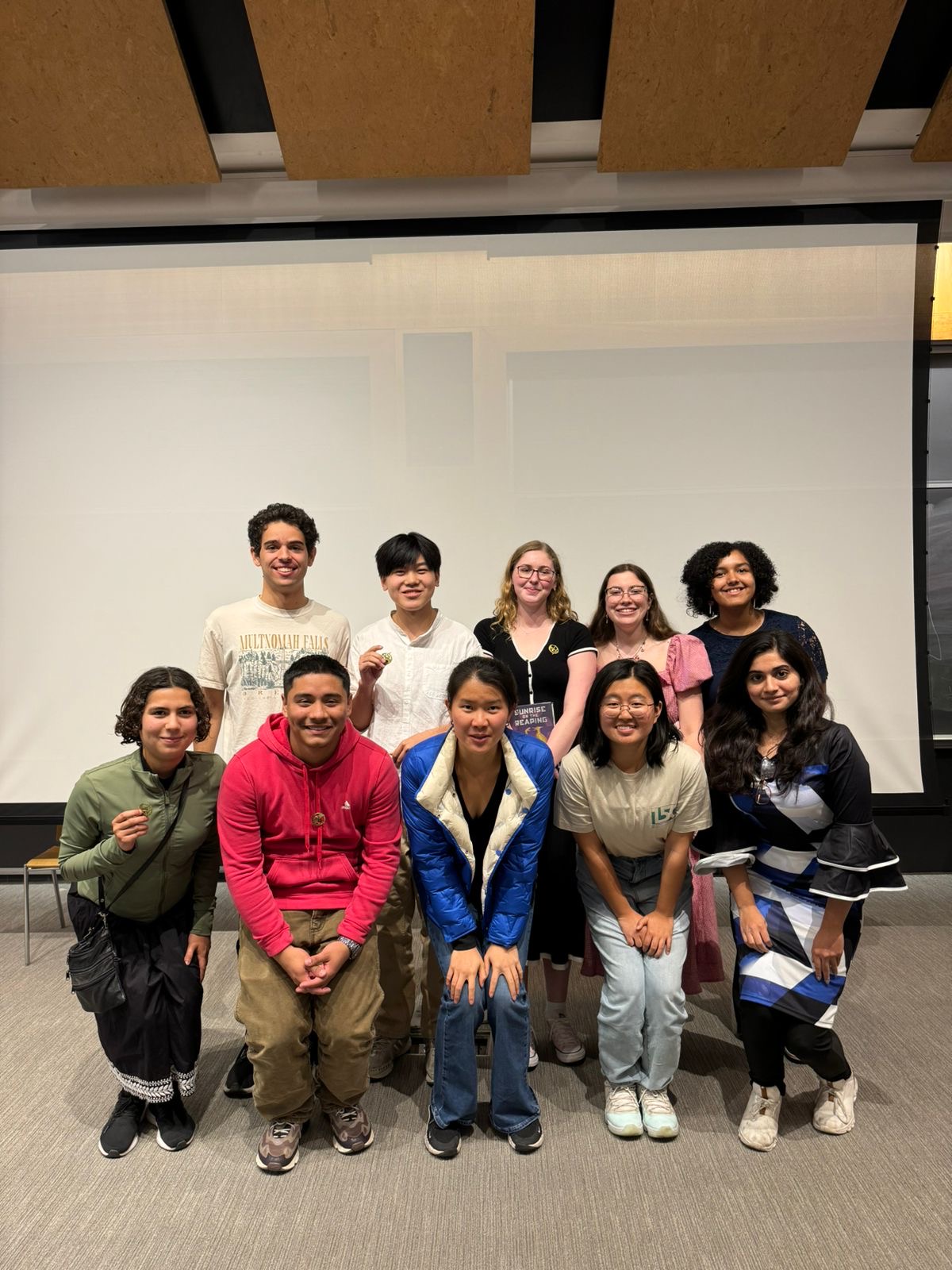
The tournament was an exceptional introduction to the world of debate. Being on home turf, too, was a huge bonus, as I was able to operate with a sense of familiarity around the space. When the tournament concluded, I was able to score a fair number of speaker points, earning eighth speaker overall (shoutout to lucky number 8!!) and acquiring my official SwatNOV reaping pin for my dorm’s bulletin board.


Swarthmore Novice Speaker Awards 🙂
My second tournament, which took place this past weekend, offered a substantial shift in experience level. This time, we were competing at the Yale 2025 Intervarsity Tournament in New Haven, Connecticut. After my classes on Friday, I joined the rest of the team on the SEPTA regional rail to board the Amtrak at 30th Street Station: indulging in some station food (Swarthmore’s cash-free policy means no paying for meals on trips) along the way. Once we arrived, we hastened to bed while I quickly skimmed the rules for British Parliamentary Debate (BP). BP follows a different format from APDA, with four teams competing: the Opening Government (OG), Opening Opposition (OO), Closing Government (CG), and Closing Opposition (CO). Each person assumes a different role within these teams, and the debate is judged according to which team is able to formulate the best, most convincing argument. This format also varies greatly from APDA in the sense that judges can simply say, “I don’t buy your argument that…” indicating that, while a line of reason was sound, it simply does not seem probable in the real world.


Arrival in New Haven, Amtrak Shenanigans, and Lunch from 30th Street Station
My partner for this tournament was particularly skilled at weighing debates (saying “we said this and this matters most because…”), so they took the second speaking role for whatever team position we happened to be assuming. This system worked incredibly well, and we were able to perform surprisingly well together, scoring alongside many of the tournament’s varsity debaters. My favorite part of the tournament, without a doubt, was connecting with other competitors, many of whom my partner and I were able to spend time hanging out with in New Haven on Saturday night. (Though, of course, the occasional win did not hurt my ego much either.)


In-Between Rounds at Yale and the View Outside the Venue
Through debate, I have been able to find an incredible community. I have attended practice every week, developing new skills every time. I have been able to see growth in my own life through a better articulation of my ideas. Now, I look forward to every single POI and POC that comes with it, and, of course, the endless new experiences that I am able to have alongside some of the most incredible people I have ever met.
