
Coming into college, I, admittedly, had no idea what I wanted to do with the rest of my life. I was brimming with interests, sure, but I could not see anything evolving into a possible career path. I did know, however, that regardless of the field I ended up pursuing, I wanted to change the world. So, I began my experimentation during my freshman year: taking courses in film, music, political science, English, language, biology, theater, and everything in between, but never stumbling upon my thing.
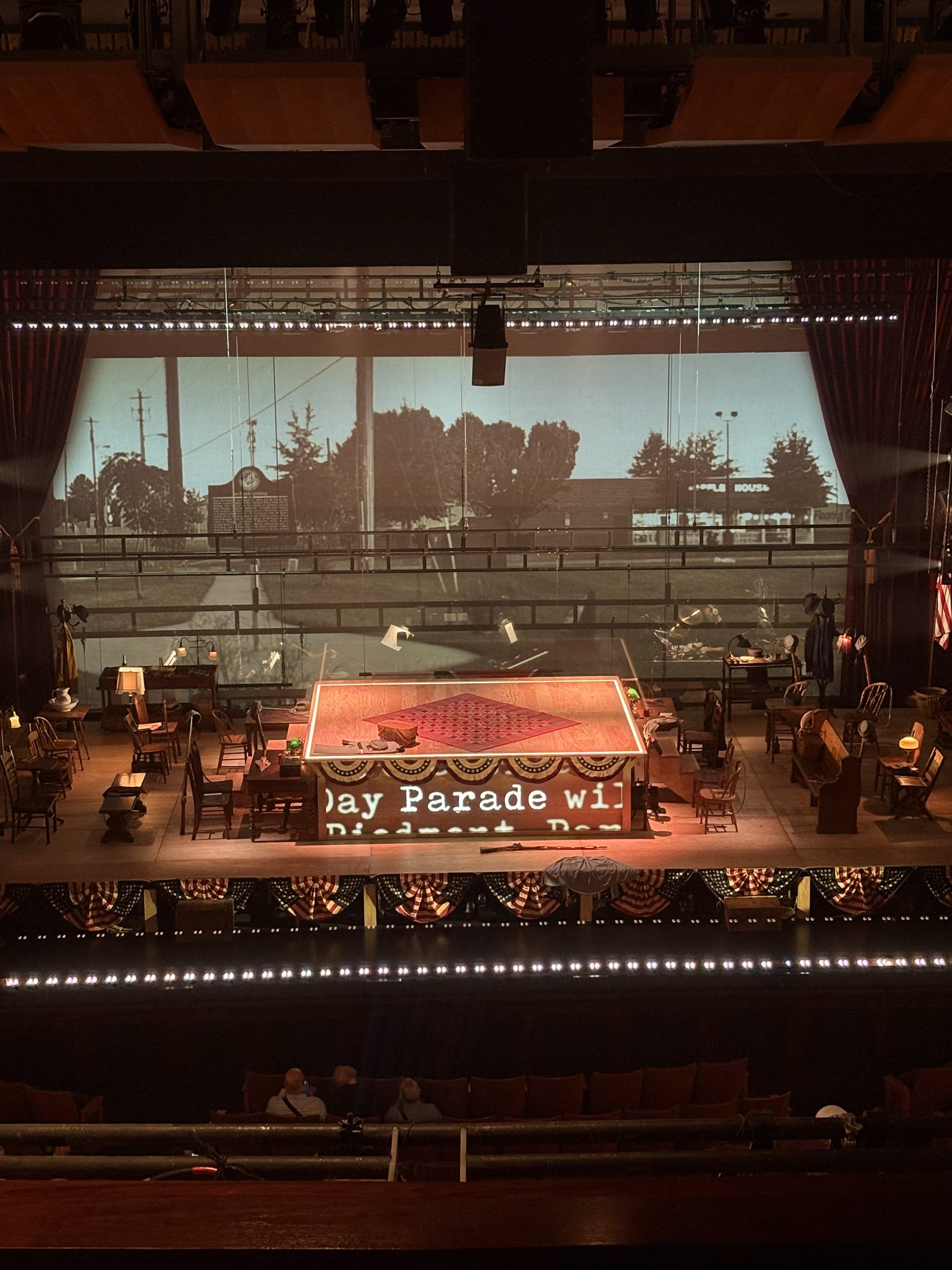
Now, in 2023, I saw Parade on Broadway: a musical that detailed the true story of a Jewish man, Leo Frank, who was wrongfully convicted & lynched in Atlanta, Georgia in 1915. Then, during winter break of my freshman year, I had been conducting research on the Holocaust–reading through memoirs, listening to speeches, and, as an extension of my prospective vision of becoming a film director, watching media related to the tragedy: Schindler’s List, The Pianist, et cetera. I had conducted similar independent research in the past, but these particular periods–global antisemitism in the 1930s-1940s and antisemitism in the US in the early 1900s, consistently returned me to those studies and, eventually, resulted in my re-scouring the course catalog for the upcoming semester. Notably, amidst the rest of the history courses laid hidden one that I had never noticed before: “Antisemitism: Theories and Politics.” On a whim, I decided to register.


Watching Parade the first time (2023) versus rewatching in 2025 (right) through a newfound contextual lens
The class itself was composed of fifteen students, along with the professor, Brendan McGeever, and Bob Weinberg (another history professor) and his wife, who were both shadowing the course. The first class set the tone for the rest of the semester: an introduction to antisemitism that was so unlike anything that I could have conceived and the establishment of rules and guidelines for the functioning of our class. We all proposed revisions for the course’s constitution and followed them closely. Through this system, the members of the course felt more comfortable engaging in discussions, and I was consequently able to listen in on some of the most engaged, enriching debates I have ever heard. We began our lessons with theory: looking at different definitions of the term. When you include a capital “A” or a hyphen in the word “antisemitism,” it links to different historical nuances, and based on our studies we began by choosing the spelling that most resonated with our understanding of the concept. From there, we discussed different definitions of the term: a practice that carried on into many of our papers.
The course was never stagnant in its concepts. We discussed everything from the Holocaust to Anti-Colonial and Black Radical Perspectives on Antisemitism. Politics, history, and sociology all came into play in our discussions, and it was so refreshing to hear so many different perspectives on the subject. Sometimes, there were weeks where I was able to talk endlessly about the content of that week’s readings, whereas with others, I would have the pleasure of sitting and listening along to the in-class dialogues. Through this, I was able to learn so much from my peers and, ultimately, gain a better understanding of the world around me.
For my final paper, I wrote about “Antisemitic Influence in the 1913 Leo Frank Trial,” the aforementioned case that had frustrated and inspired me to take the course in the first place. I was able to tie so many course concepts, from observations of anti-semetic stereotypes to the exceptionalism (as opposed to racism) of the case: creating a research piece that I was incredibly proud of and which I am currently seeking to expand and publish in an undergraduate journal (either the Tri-Co Law Review or the Swarthmore Undergraduate History Journal). Additionally, I became acutely aware of my desire to right injustices within our legal systems and society: propelling me towards a pre-law track with an emphasis in civil justice. In my preparation for law school, I have joined Swarthmore’s Amos J Peaslee Debate Society, along with Youth’s For Innocence: a non-profit seeking to empower youth to help overturn wrongful convictions through non-lawyer advocacy. In my work with the club thus far, I have been able to work with intaking, summarizing, investigating, and advocating for innocence cases (for individuals who have been wrongfully convicted of committing crimes) to ultimately present them to attorneys and allow these individuals to take the first steps towards exoneration. I have also turned my academic interests more towards similar interests–devoting much of my time this semester to my “History of the Black Body” course.

Often, the courses that change your life are the ones that you least expect. “Antisemitism: Theories and Politics” was easily the most insightful class I have ever taken, and I am so grateful that, under the guidance of such a wonderful professor and through collaboration with my peers, I was able to find a clearer path towards my life’s goals and passions. Certainly, I have a while to go until I am able to change the world monumentally, but I truly feel that Swarthmore is allowing me to get closer and closer every single day.
