
Do you know the saying “The world’s your oyster?” It originally comes from the Shakespeare comedy The Merry Wives of Windsor where the original quote is “The world’s mine oyster.” Apparently, this was a thinly-veiled threat to get money, as in “I can take your money as easily as I can pop open an oyster and grab a pearl.” Although almost certainly used in the meantime, it came to my attention approximately 400 years later, when it reappeared on stage in NYC street-kid dialect as “The woild’s yer erster!” in the Broadway musical Newsies. It has evolved into the idea of “all the world is open to you, you never know what you will find.”
To me, this idea is closely tied to the Swarthmore experience. I don’t know if it makes more sense to say, “The campus is your oyster” or, “The world is your campus,” but it is true that Swarthmore opens a world of possibilities to students. There are countless opportunities for expanding one’s horizons outside of the classroom, and one way this happens is through the variety of visiting speakers, performers, and visual artists who come to campus each semester. There are so many programs hosted by different departments that, even if you wanted to, it would be impossible to take advantage of all of them. In addition to the speakers hosted by individual departments (mathematicians, peace activists, chemists, linguists, engineers, historians, educators, economists, etc.), the college provides a varied selection of lectures, performances, and exhibitions called the Cooper Series. These events are funded through the generosity of the William J. Cooper Foundation and, like everything else on campus, are free to everyone.
To give you a taste of what a typical semester offers, here are some of the people who enriched our experience as they passed through our campus this semester.

The Dupont Brass
To kick off the semester, this 10-piece band from the DMV (this is an abbreviation for Delaware, Maryland, Virginia—who knew?!) performed on a Friday evening in LPAC (Lang Performing Arts Center). To complement the relaxed vibe of the performance and to attract more students, who always turn out for free food, the college hosted several food trucks outside the music building. Since the Dupont Brass performance happened before any of us really had much schoolwork to do, it was a welcome opportunity to hang out and enjoy some great music.

Christian Cooper
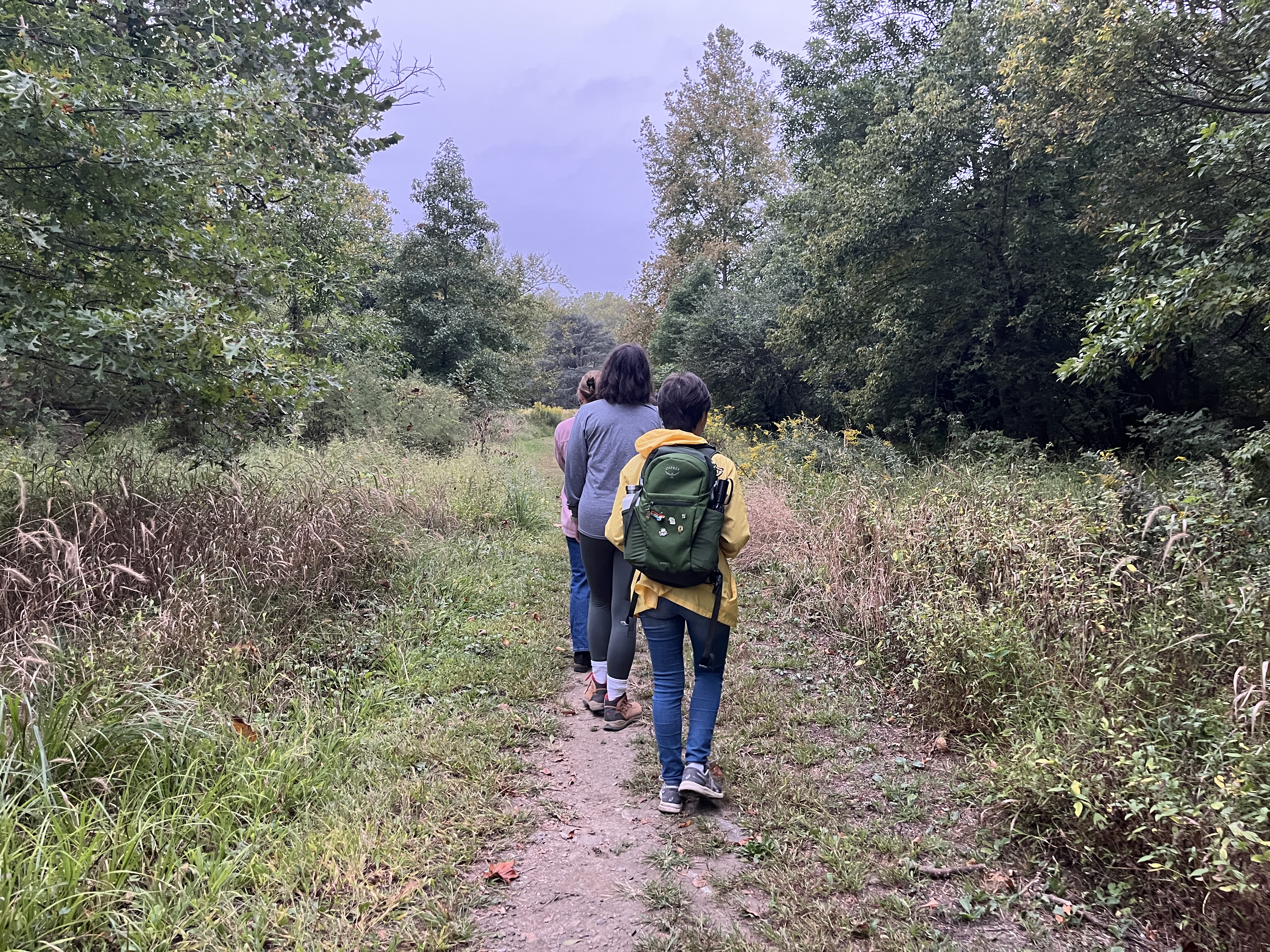
At the end of September, comic writer, birder, educator and activist Christian Cooper spent three days on campus. Cooper is the NY Times best selling author of Better Living Through Birding and advocates for safe green spaces for all and outreach to youth in underserved communities through the NYC Birding Alliance. He gave talks about birding and his DC Comics story “It’s a Bird,” and led a panel discussion on “Birding While a Minority.” In addition, he led two bird walks—one at the John Heinz National Wildlife Refuge, and another in our own Crum Woods. I participated in the walk in Crum Woods, and I was surprised by how many Swat students got up early enough to be on a bird walk at 7 am!

Eitetsu Hayasi
Taiko legend Eitetsu Hayashi was in residency at Swat for four days in October, giving multiple workshops, a master-class, a lecture, and a concert. In case you don’t know (I didn’t before I came to Swat), Taiko is a Japanese art form that combines dance and drumming. There are Taiko classes offered at Swat every semester and it is a very popular part of the end-of-semester student dance concert. I attended a lecture called “Forging the Path of a Taiko Drum Artist” with my Ballet III class because the dance department is always looking to promote “conversation” between different styles of dance. The finale of Hayashi’s time on campus was a Taiko concert called Sonic Bodies, so highly attended that the 700-seat theater was filled to max capacity. My favorite part was the opening number in which Swarthmore Taiko drummers played alongside Hayashi and his troupe; I can only imagine how special that experience must have been for those Swatties!

The Artists of “The Sky Loves to Hear Me Sing: Woodland Art in Transmotion”
Woodland Native Arts and Ecologies, cross-listed in Art History and Environmental Studies, was one of the unique course offerings this fall. The professor who taught the course also curated an exhibition of “Woodland Native art” in the List Gallery and several artists whose works were featured came to Swarthmore to discuss their art. Swarthmore’s Land Acknowledgement recognizes that the campus is situated in the “Land of the Lenape,” and this course, exhibit, and discussion gave students an opportunity to engage with indigenous art of the woodland tradition. I like that you catch a glimpse of what is on display in the List Gallery from the pathway outside LPAC (Lang Performing Arts Center). This invites community members who might not be into the arts scene to come inside and check it out.
I’ve described only four out of the ten Cooper Series programs for the Fall semester. As you can see, there are a lot of interesting people visiting campus—bringing new art and ideas, and opening the world to Swarthmore.
