
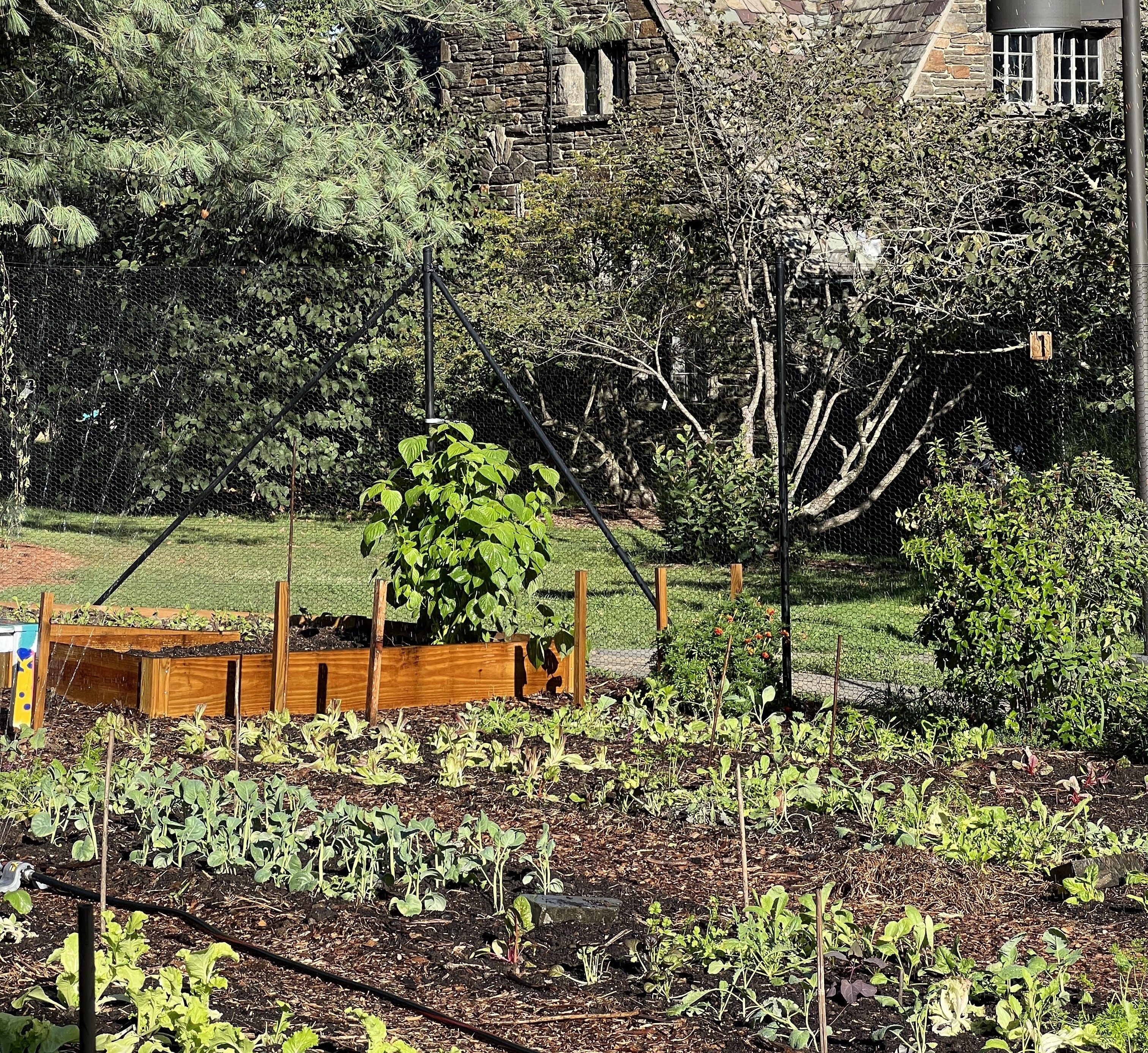
Swarthmore tries to foster engaged scholarship across departments (whether by partnering with community organizations, doing work outside the classroom, or taking field trips off campus). One of my favorite ways this engaged learning has manifested itself in my academic career is through an environmental studies class called Our Food. Our Food is incredibly popular (for good reason), and I was lucky enough to get a slot in the 12-person seminar last fall.
The class has a few major components – a weekly quiz on the scientific material we’ve learned, an hour-long seminar-style discussion on the reading material, and about an hour of garden time. Arguably, the reason Our Food is so loved by Swat students is because of the garden time. Each student in the class is responsible for cultivating a garden plot with a variety of vegetables (including carrots, kale, chard, turnips, daikon, and many, many more) as well as a row plot with a single vegetable (mine was White Russian kale). Around four times a semester, all the students in the class harvest their vegetables and we do a harvest giveaway. The giveaway is always really well attended (unsurprisingly, because we’re giving away free organic produce). At the end of the giveaway, if there are any vegetables left over, we either give them to the dining hall to use or to a nearby food bank. Students, faculty, staff, and anyone else near campus always flock to these giveaways, and it’s so beautiful to see so many appreciating the (literal) fruits of your labor! Growing the produce and getting my hands and knees in the dirt has been one of the most rewarding things I’ve been able to do during my time at Swarthmore. Being able to learn, in a kind of nebulous bookish way, about things like how legume roots fix nitrogen or how carrot plants are dicots is amazing – but being able to see those things in real life in the garden was so enamoring and brought me so much joy.
Being in the garden may be the flashiest selling point of Our Food, but I also loved the seminar portion of the class (and even the weekly quizzes). The hour we dedicated to discussing the weekly readings was something I really looked forward to (even when I was scrambling to finish my readings the night before). I felt like they were really enriching conversations about a wide range of topics related to food systems, including Black and Indigenous ways of interacting with the land, GMOs and organic food labeling, and the omnipresence of corn in American society. The quizzes, which primarily focused on the scientific material we learned in the class, were something I was initially deeply scared about. Historically, I’m not the biggest fan of STEM stuff, but something about those quizzes was vindicating. I won’t lie; they were challenging, and I don’t think I ever got a perfect score. But spending time studying and then going in and pretty regularly doing well on them and feeling like I was actually learning new material in a way that would stick with me kind of shifted my perspective on STEM classes in general. It was challenging and time-consuming, but I didn’t ever feel like it was a waste. I felt like the challenges were fair, and I appreciated doing well in the class even more because I knew I had overcome challenges to get to where I was.
At Swarthmore, we’re encouraged to venture outside of our comfort zones. We’re invited to overcome challenges (with ample support). We work together, grow together (again, literally in this case), and bear the fruits of our labor together. I loved Our Food so much because it made me grow a lot as a person, as a student, and as a member of my community.


