
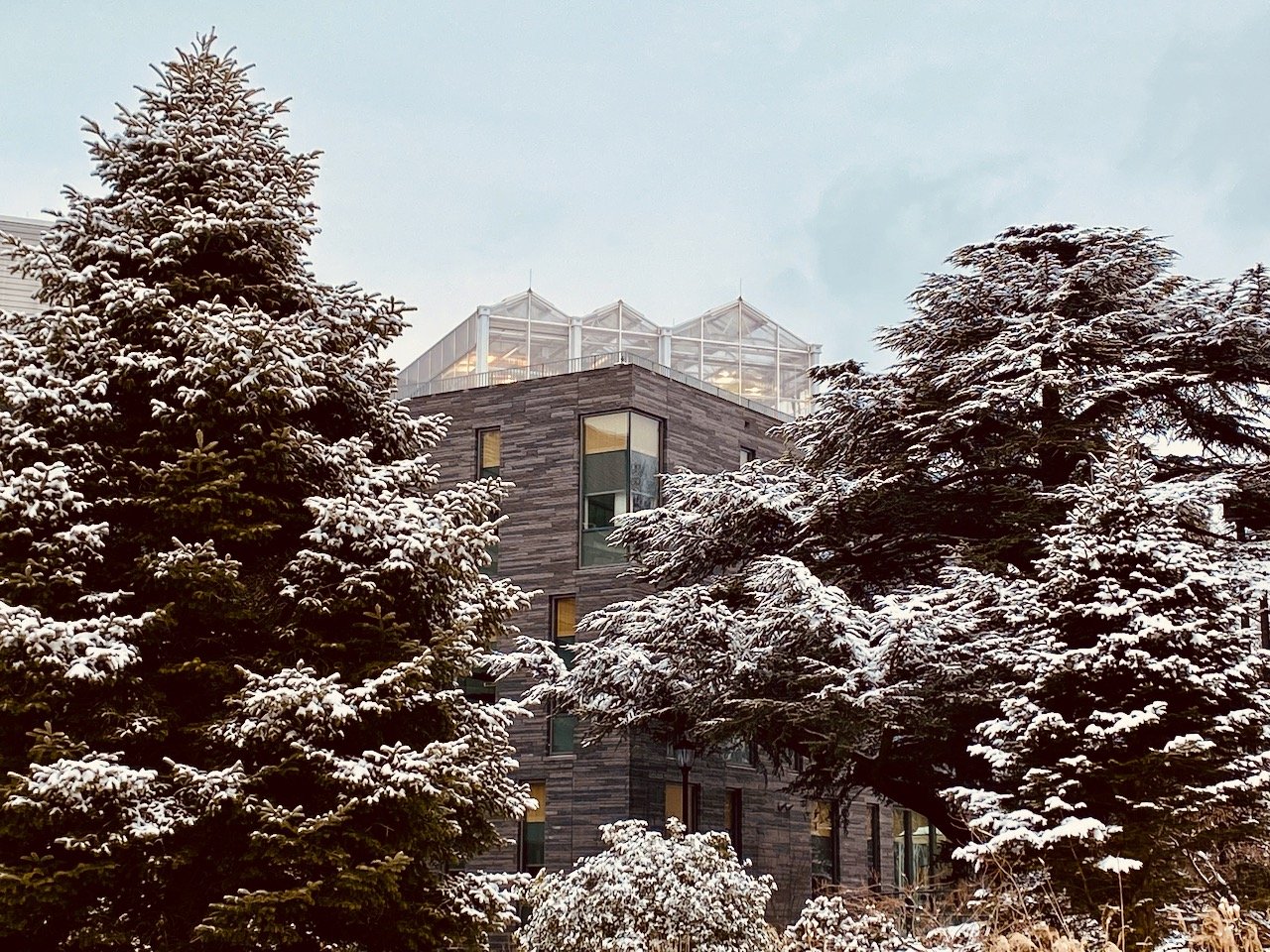
One of the most striking features of Singer Hall, our new building for the departments of biology, engineering and psychology, is the large greenhouse perched upon the roof. Many a Swattie, myself included, have found themselves wondering what goes on inside this crown jewel of Singer, especially upon seeing its incandescent glow that illuminates the early hours of the night. This past spring, the Biology Club sent around an email informing its members that they could sign up for tours of this secret rooftop garden. Being a plant lover, I immediately pounced on this opportunity and signed up for the soonest tour that was available.
The day of my tour, it was cold, cloudy, and lightly raining. Despite these harsh conditions, inside the greenhouse it was bright, warm, and full of life. Heaters and lights kept the conditions inside perfect for the many exotic plants in the collection. The greenhouse is divided into three sections, with the sections containing desert plants, tropical plants, and vegetable plants.
The first section I explored was the desert plants, as these are some of the most fascinating members of the plant kingdom (in my humble opinion). There were numerous beautiful specimens of succulents and cacti, such as an impressively large Crassula ovata “Gollum” which looked like a sort of alien tree.

After seeing the collection of desert plants, I moved on to the tropical plants. This section was absolutely brimming with sprawling, leafy plants that seemed to reach out to greet me as I passed. This section also contained no shortage of fascinating plants, the most impressive of which were Swarthmore’s very own consortium of corpse flowers, or titan arum.

The largest of the group, which were all currently in the vegetative state of their growth cycle, resembled a small tree with a strange, green and white spotted trunk. Our guide, one of the greenhouse managers, informed us that what we were looking at was not a tree, or even the stem of a plant, but was in fact one single leaf! Corpse flowers produce these massive leaves to gather enough energy for their equally (if not more) impressive blooms that come every few years.
Moving on to the last section of the greenhouse, I was greeted by a lush garden full of common vegetable plants such as tomatoes and cucumbers. I was informed that these plants were part of a project being conducted by the students in the plant biology class, and that these plants were just planted as seeds a couple months prior. They had already grown to impressively large sizes, and some were even ready to be harvested (though, I’m not sure if the end goal of the project was just to grow some tasty produce).

If you are a plant lover like me, Swarthmore has no shortage of incredible plants to marvel at and enjoy. From this rooftop greenhouse to the Crum Woods and the countless gardens all across campus, there are so many areas with wonderfully diverse plants for everyone to enjoy. Living in an arboretum affords Swatties the opportunity to connect with nature at any time and in truly incredible ways, and this is certainly something that I think makes Swarthmore an amazing place to be.
