
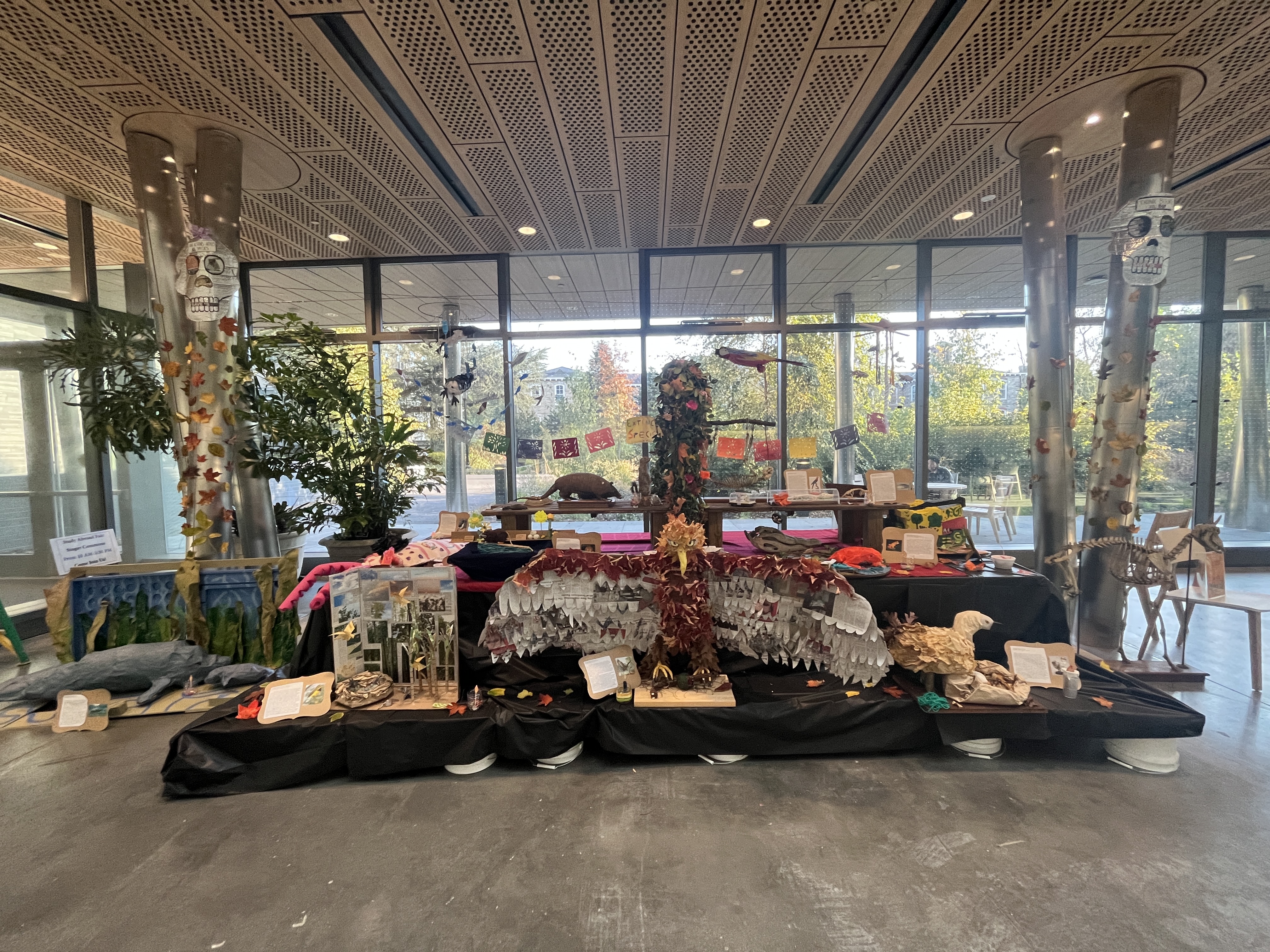
I love when my Swarthmore professors utilize ‘non-traditional’ methods to facilitate and assess our learning. My favorite academic project so far at Swarthmore was my Conservation Biology (BIOL 037) midterm. Under Professor Itzue Caviedes Solis, it has become a tradition that, instead of a traditional midterm exam, the class works in teams to collectively make a Dia de los Muertos (Day of the Dead) Ofrenda honoring extinct species.
We did the project with partners—first choosing and researching an extinct species, then creating an art piece to place on the Ofrenda, and finally giving a speech about our species to the campus community at the Dia de los Muertos “celebration.” My partner and I chose Bachman’s Warbler, a songbird, native to the southeastern US, which was last sighted in 1832. There were very few recorded human encounters with this bird, so its life and extinction are somewhat shrouded in mystery. I enjoyed reading every relevant article available on Tripod (the Tri-College Consoritum research portal). It was rewarding to piece together all the disparate accounts, which explored everything from the warbler’s indigenous cultural significance to its genetics. I became an “expert” on a species that most people will never hear about, and then had the opportunity to share its story with our campus community! I was pretty surprised at the relatively large turnout for our event. It is testament to Swattie’s curiosity and interest in learning from each other about topics that we aren’t focusing our personal studies on.
As an artistically-inclined person majoring in a STEM field, I really appreciated that this project focused on combining art and science to effectively share our conservation message with the Swarthmore community. A fun added wrinkle was the challenge of using exclusively recycled/waste materials for our projects. I had a lot of fun creating our art piece and it was also fun to see my biology classmates’ swap their lab coats for hot glue guns. All the pieces were so unique and creative! In a field where creative expression is not often celebrated, it was inspiring to see my peers’ artistry and the pride we all took in our projects.
I enjoyed listening to all of the speeches during our exhibition’s opening ceremony. Everyone took a slightly different approach to telling their species’ story, but every speech shared the hope that people would leave the event with a new appreciation for all organisms. Regardless of whether they are majestic or have practical value to humans, all species matter and should be valued accordingly. After the event, our Ofrenda was displayed in the Singer Hall atrium for about a week. It was gratifying to see even more students and faculty stopping by to learn about extinction through our collective artwork made from their trash.

